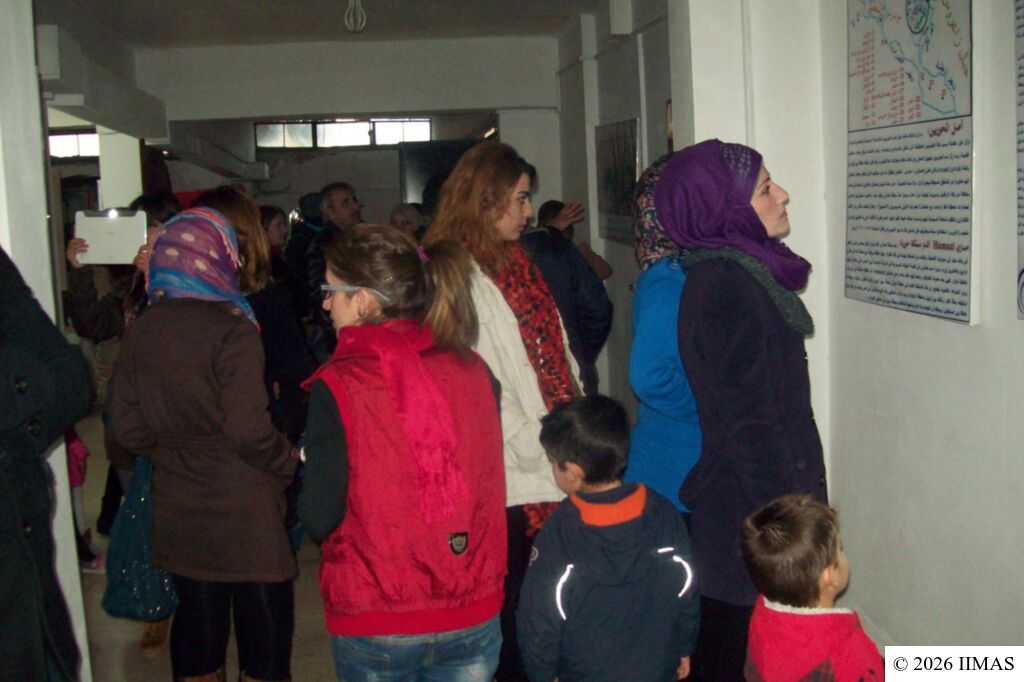
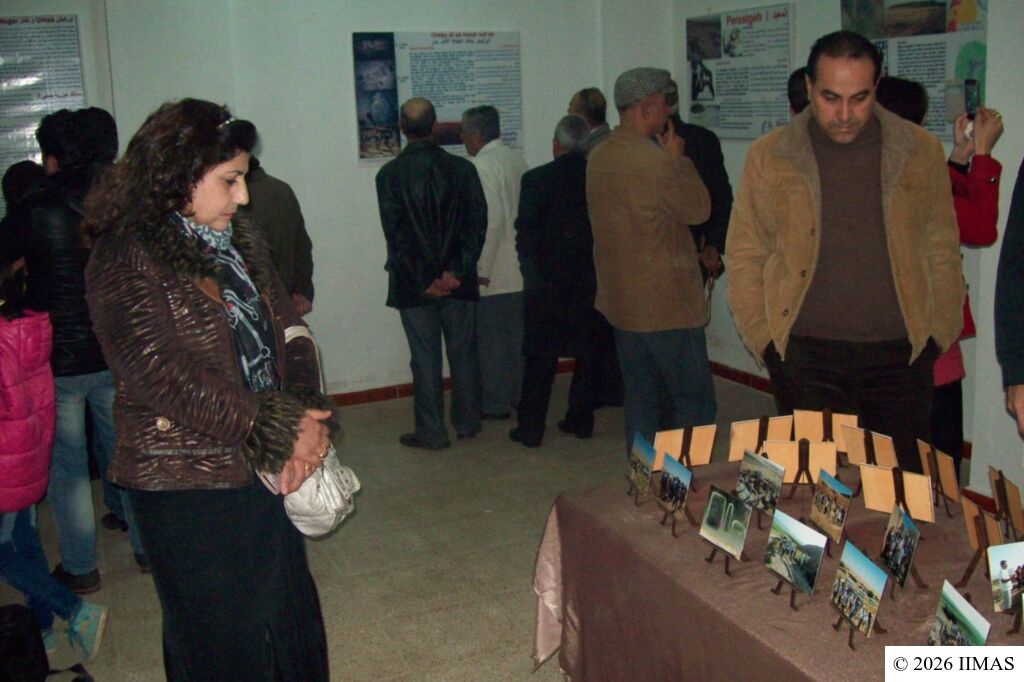
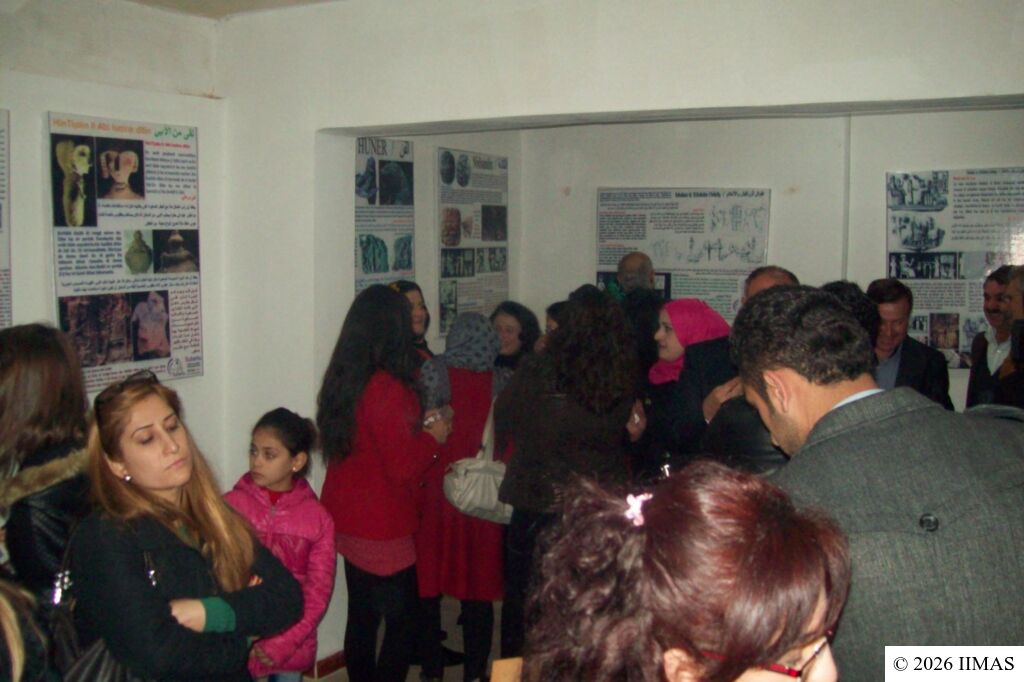
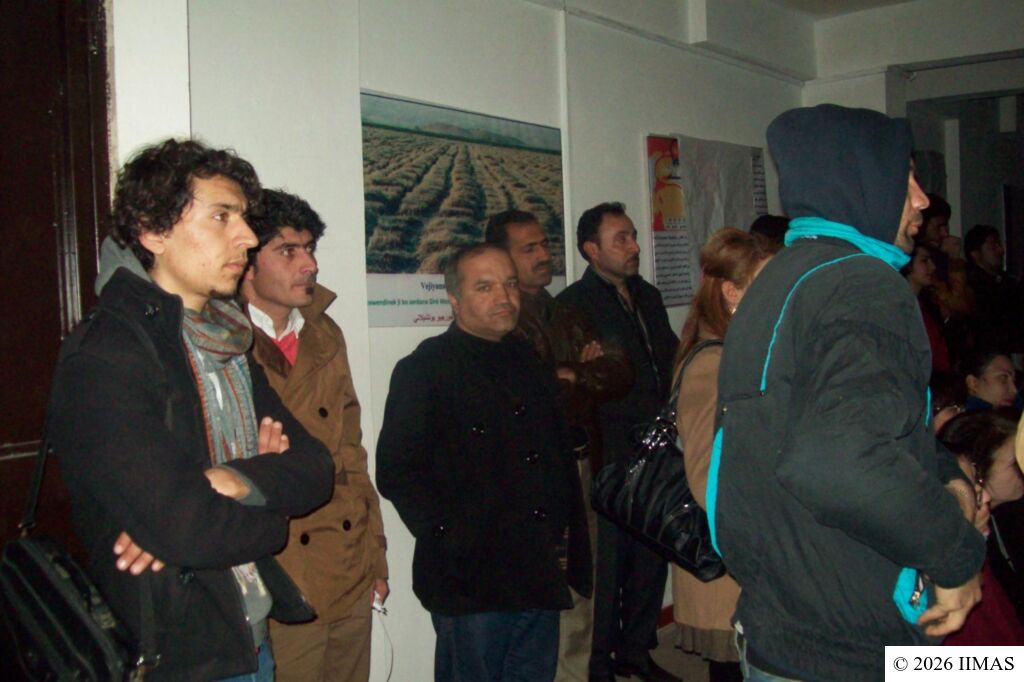
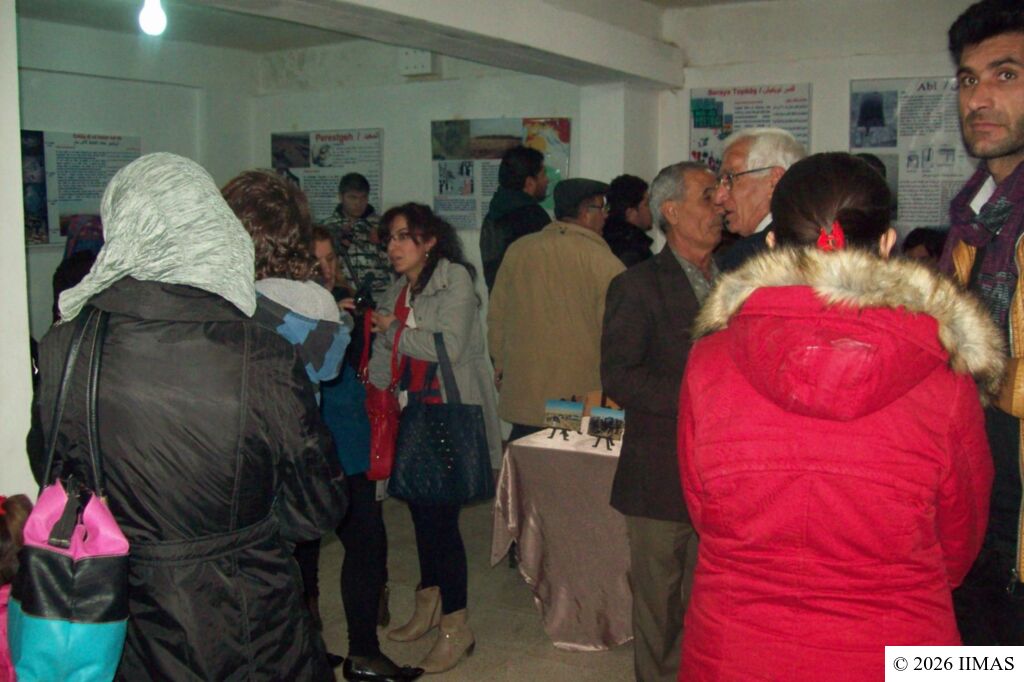
At the Subartu Association Centre in Qamishli, on 30 December 2014, an archaeological and cultural exhibition entitled The Reawakening of Life in Urkesh – Tell Mozan was inaugurated in the presence of a distinguished audience of intellectuals, writers, and people interested in archaeology and history. The exhibition was conceived as an invitation to visit Tell Mozan and discover the ancient city of Urkesh through photographs, documents, and other forms of visual and documentary material.
The exhibition featured 19 display panels in both Kurdish and Arabic, presenting the history and civilization of the Hurrians, the archaeological excavations at Tell Mozan, and the most significant archaeological discoveries made at the site.
|

|
The panels were prepared on the basis of publications and scholarly materials available on the archaeological mission’s website, as well as the book An Invitation to Visit Tell Mozan – Ancient Urkesh. To the best of our knowledge, this was the first book published in Kurdish by an archaeological mission. In recognition of the significant archaeological and scholarly contributions of Giorgio Buccellati and Marilyn Kelly-Buccellati to the discovery of this buried city and the revival of its history, the exhibition was dedicated to them in appreciation of their efforts and contributions.
Tell Mozan was chosen as the subject of the exhibition because of its archaeological and historical significance. It is one of the largest archaeological mounds in the Jazira region of Syria, and the archaeological mission working there has achieved important scientific results. Furthermore, archaeological research and the study of history lie at the heart of the Subartu Association’s activities and objectives.
|
|
This was not the Association’s first archaeological exhibition. In 2013, it organized an exhibition entitled Our Archaeological Heritage in Pictures, which presented the major archaeological mounds and sites throughout the Jazira region of Syria. In May 2014, the Association organized another exhibition entitled A Call to Protect the Islamic City of Hasankeyf in Turkey, drawing attention to the city’s imminent submergence as a result of a dam project. In addition to these exhibitions, the Association organized several other activities focusing on history, as well as field trips and academic visits to archaeological sites, including Tell Leilan, Tell Beydar, Tell Arbid, and Tell Sha’ir.
The Tell Mozan exhibition initially ran for three days. Due to the encouraging public response, it was extended for an additional two days. It was also intended to travel to other cities, in keeping with the Association’s practice of taking its exhibitions and their cultural and archaeological content to different communities.
The Association was based in a rented basement in Qamishli and had members throughout the governorate. Its membership recruitment focused particularly on university students specializing in history and archaeology, as well as individuals with a broader interest in these fields. This reflected the Association’s commitment to involving young people and interested members of the community in protecting, preserving, and promoting cultural heritage.
|
|
Back to top: Exhibition in Qamishli